
Choosing a padel racket is never random. Shape, weight, balance, materials and playing style are just some of the factors that affect your performance on court. Whether you are a beginner or have been playing padel for years, this guide will help you understand how to choose the right padel racket for your playing style.
Padel racket shapes
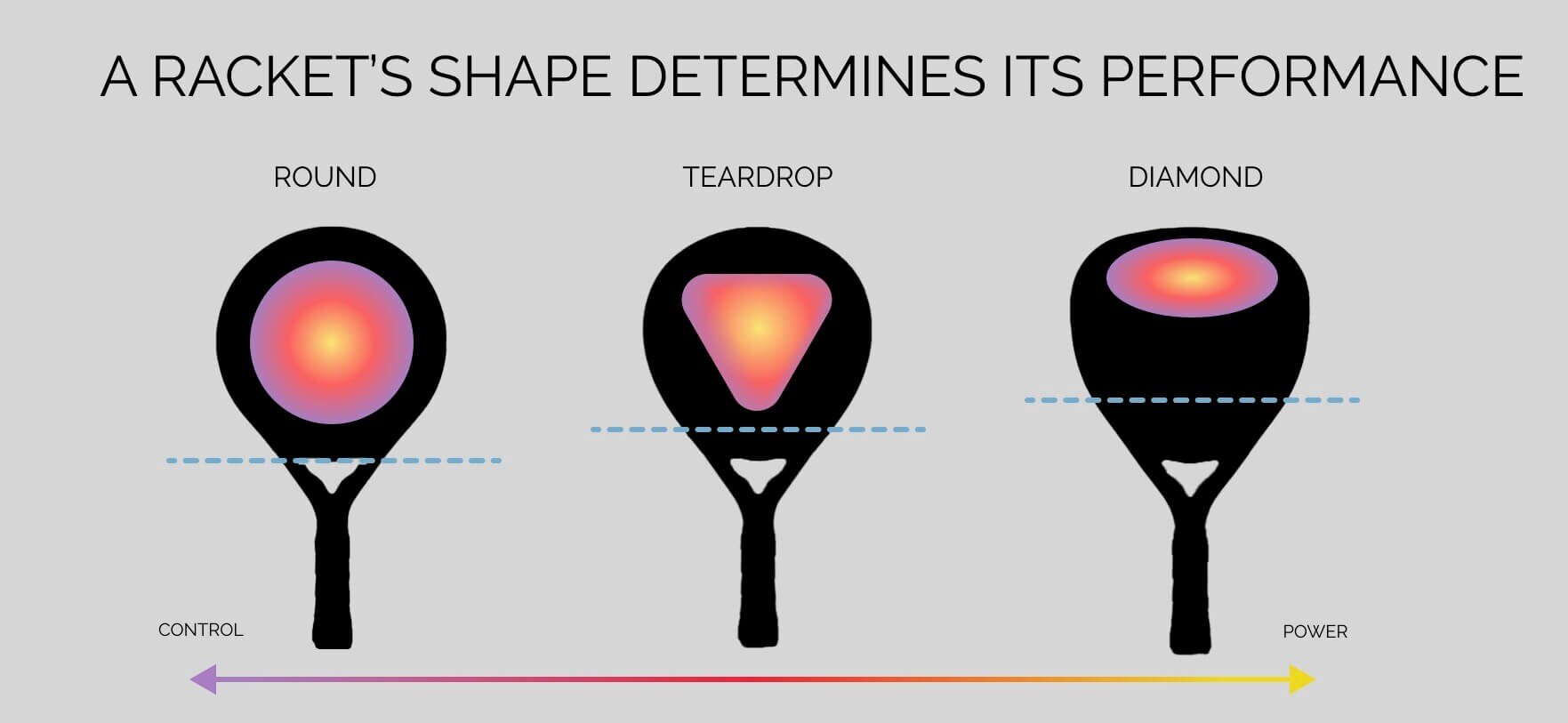
The shape of a racket directly affects power, control and the optimal hitting area (sweet spot).
In fact, shape is the most influential factor – roughly 75% of how the racket behaves. It determines whether the racket is better suited to control (round), balanced (teardrop) or attacking (diamond) play.
The remaining 25% comes down to the materials used: the type and density of the carbon in the frame and face, and the type of core (soft, medium or hard EVA). These do not change the category of the racket, but they fine-tune the feel of the shot – that is, how stiff or how comfortable the racket feels on impact.
So for a padel player, choosing the shape is the first important step, and materials become relevant as your game develops and more specific needs appear.
Round racket (the classic shape)
- Features: Large, centrally placed sweet spot.
- Advantages: More control, forgiving of mistakes.
- Recommended for: Beginners and defensive advanced players.
Diamond racket (pear shape)
- Features: Small sweet spot, placed higher up.
- Advantages: More power in your shots.
- Recommended for: Advanced, attack-focused players.
Hybrid racket (teardrop shape)
- Features: A combination of control and power.
- Advantages: Versatility, a balance between attack and defence.
- Recommended for: Intermediate and advanced players who want an all-round game.
Types of balance
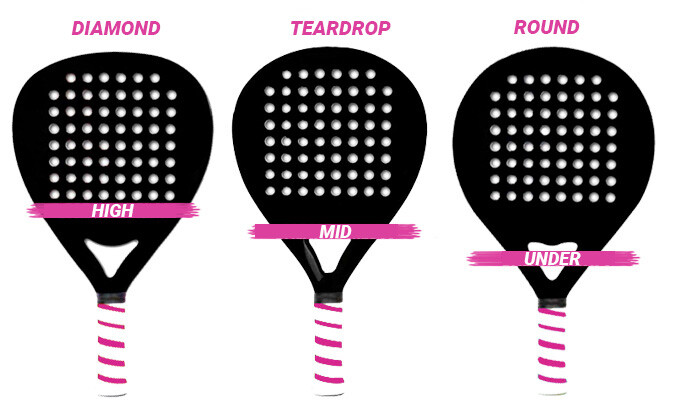
Balance shows how the weight is distributed in the racket and affects handling speed and shot power.
Low balance (head light)
- Weight concentrated towards the handle.
- Excellent control, improved manoeuvrability.
- Ideal for: Beginners and defensive players.
Medium balance (even balance)
- Evenly distributed weight.
- A good compromise between control and power.
- Ideal for: Versatile, intermediate players.
High balance (head heavy)
- Weight concentrated towards the head of the racket.
- More power in your shots, but harder to control.
- Ideal for: Aggressive, attacking players.
Padel racket materials
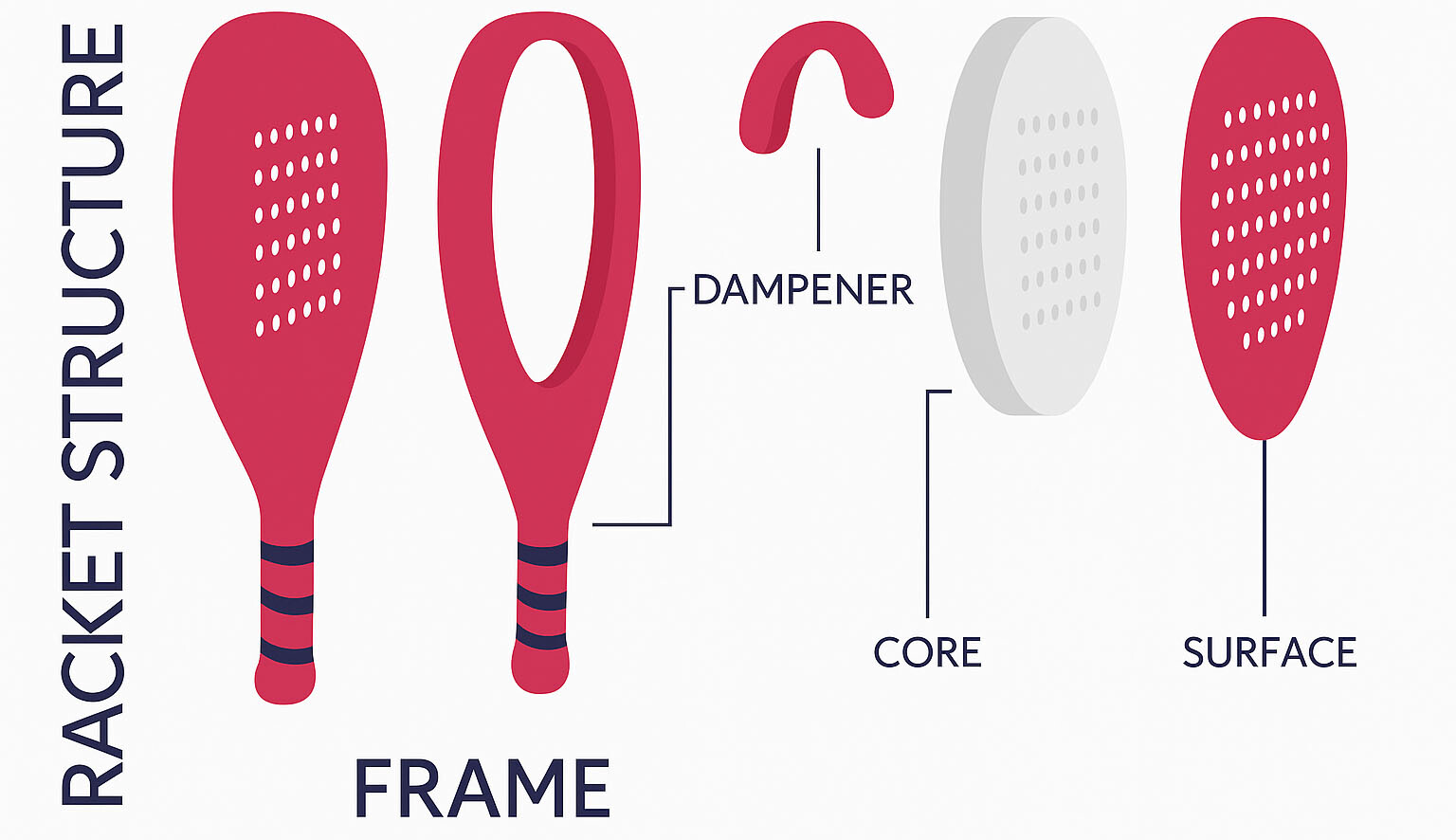
Materials affect durability, stiffness and feel on impact.
Frame
- Carbon – very tough and stiff. It offers power and precision, but less shock absorption. Used especially in premium rackets or for advanced players.
- Fibreglass – more flexible and elastic. It offers more comfort and forgiveness on mishits, but less raw power. Often found in entry-level rackets.
- Composites – a combination of carbon and fibreglass (or other materials), for a balance of power, control and comfort.
The core
- EVA Soft (soft rubber)
- Absorbs more shock, which means more comfort and protection for your arm.
- Good control, but the ball comes off the racket less explosively (you lose some power).
- Recommended for beginners or players with elbow/shoulder problems.
- EVA Hard (hard rubber)
- Stiffer, the ball comes off harder: explosive shots and more power.
- You get less comfort and vibration absorption, and control decreases.
- Preferred by advanced/aggressive players looking for speed and attack.
- FOAM
- The softest material, it offers a lot of comfort and the ball comes off very easily.
- It gives you the feeling that the racket “helps” you hit the ball effortlessly.
- Less durable than EVA, used in recreational or entry-level rackets.
Racket weight
- Light (345-365g): Easier to handle, recommended for women and physically less powerful players.
- Medium (365-375g): The most common weight, offering a good balance.
- Heavy (375-390g): More power, but requires strength and technique.
Your playing style: Control vs Attack
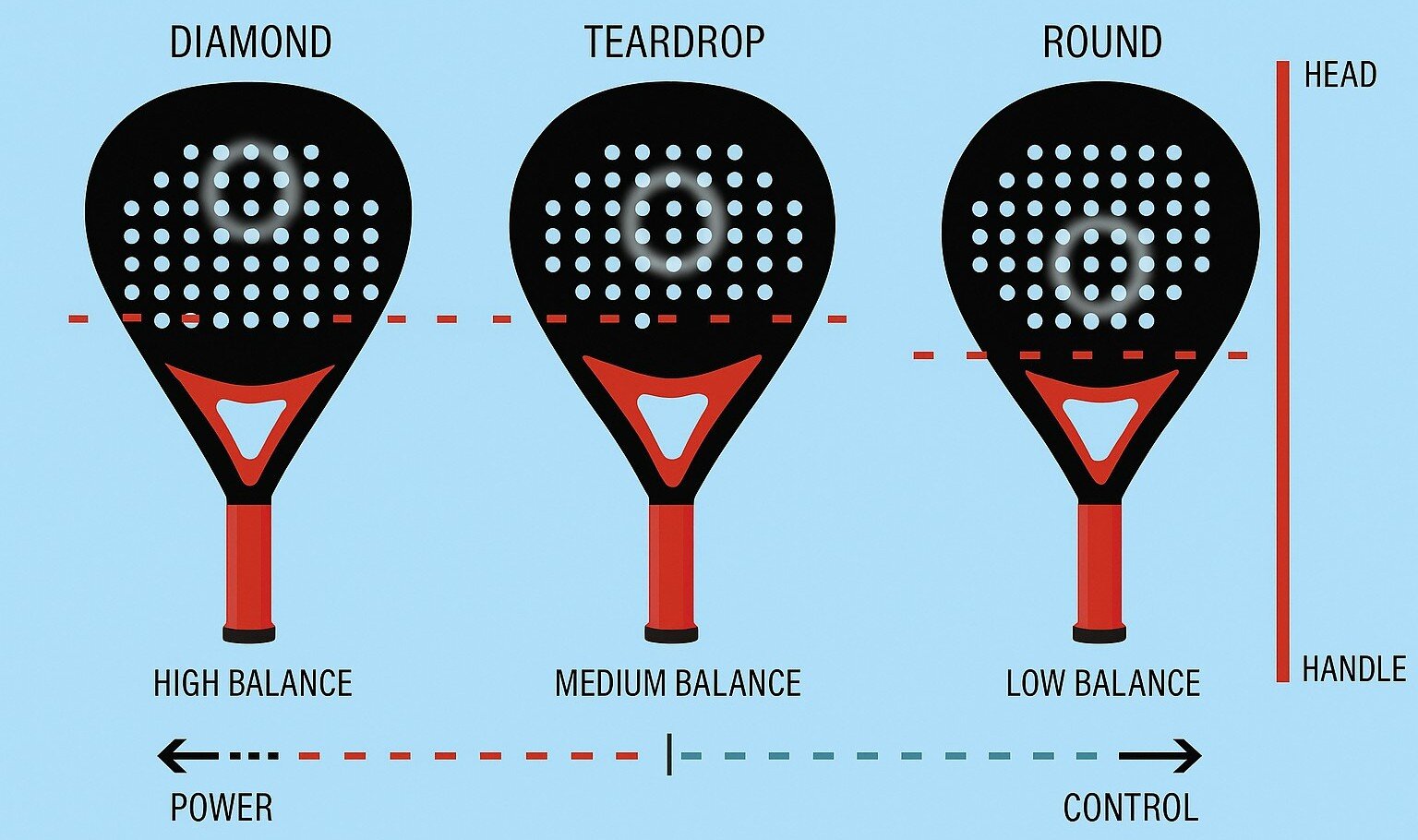
Choose your racket according to what you are looking for in your game.
Control
- Round rackets, low balance, EVA Soft core.
- Suitable for players who prefer precision and placed shots.
Attack
- Diamond rackets, high balance, EVA Hard core.
- Suitable for players looking for smashes and decisive shots.
Balanced
- Hybrid rackets, medium balance, mixed materials.
- Suitable for all-round players who play both defensively and offensively.
Other things to consider
The handle (grip)
- It can be adjusted with overgrips to get the ideal thickness.
- The right grip gives you more precision and comfort.
Anti-vibration technology
- Many modern rackets include special anti-vibration systems built into the frame or the core, designed to reduce discomfort and prevent injuries.
- Control rackets (round shape, low balance, soft core) are naturally the best suited to players who suffer from elbow or wrist pain.
- If you have had problems with epicondylitis (tennis elbow) or other joint inflammation, choose a racket that is as arm-friendly as possible and avoid hard, stiff and unbalanced models.
Your level
- Beginners: Round racket, low balance, softer material.
- Intermediate: Hybrid, medium balance, mixed materials.
- Advanced: Diamond shape, high balance, carbon and a hard core.
Conclusion
Choosing the right padel racket can completely transform your playing experience. There is no “best” racket, only the one best suited to your style, level and goals. Try them out, ask for advice and don’t forget: the right racket makes you enjoy every match more!